
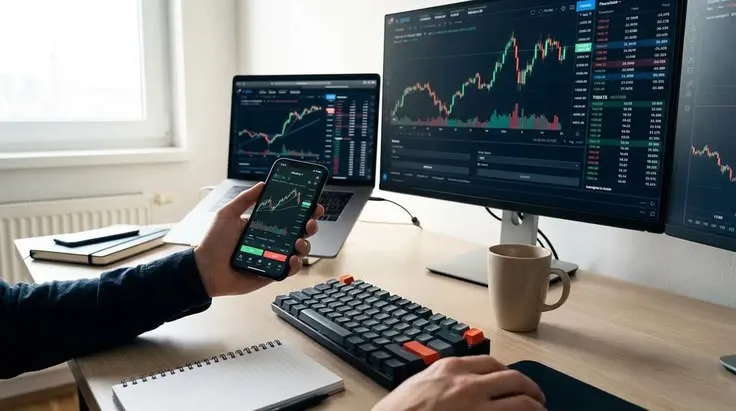
Choosing between a mobile app and desktop software can shape how comfortably a beginner learns the forex market. Anyone exploring a top application trading forex options should consider where, when and how they expect to practise. Mobile access can make monitoring markets convenient, while desktop platforms generally provide more screen space for detailed analysis. Neither format is automatically better for every trader. The right choice depends on trading habits, analytical needs, available devices and the level of attention a user can give to each session.
Consider Your Trading Routine
A trader’s daily routine should influence the platform they use for practice. Mobile apps may suit people who need to check markets while travelling or away from a computer, whereas desktop software can be more practical for planned analysis sessions. Beginners should avoid choosing purely on convenience because easy access can sometimes encourage unnecessary trading. A useful practice setup should fit naturally into a schedule and provide enough time to evaluate market conditions, review potential risks and make decisions without feeling pressured to act immediately.
Compare Charting Space and Analysis
Screen size can make a noticeable difference when studying charts. Desktop platforms typically allow traders to view larger charts, compare different timeframes and keep several pieces of information visible at once. Mobile interfaces can still support technical analysis, but limited screen space may require more switching between charts and tools. For beginners learning support, resistance, trends or indicators, a larger workspace can make patterns easier to review. Mobile access remains valuable for quick checks, but detailed analysis may be more comfortable when performed on a computer.
Practise Through MT5
Traders interested in desktop practice may explore mt5 demo account experts resources while learning how the platform functions work in simulated conditions. A demo environment can help users practise placing orders, selecting trade sizes, monitoring positions and applying risk-management instructions without immediately committing real funds. It also gives beginners time to understand navigation before market pressure is added. Demo results, however, should remain in perspective because live trading may involve different emotional responses, execution conditions and financial consequences that simulation cannot fully reproduce.
Review Order Management
Order management should be easy to understand regardless of the device being used. Beginners need to recognise how market and pending orders work, where position size is entered and how protective instructions can be applied. Desktop platforms may make multiple controls easier to view simultaneously, while mobile apps can provide faster access when a trader is away from their main workstation. The important factor is accuracy rather than speed. Users should practise every order function carefully so that operating mistakes do not become an additional source of trading risk.
Think About Distractions
Mobile trading can be convenient, but phones also contain messages, social media alerts and other distractions that may interrupt analysis. Desktop practice may encourage a more structured environment because traders can dedicate a specific period to studying markets. Still, using a computer does not automatically create discipline. Traders should establish clear rules for when they analyse charts, when they place practice trades and when they stop. Reducing distractions can help beginners focus on the reasoning behind each decision instead of reacting emotionally to every short-term movement in price.
Use Both Platforms Strategically
Many traders do not need to choose one format exclusively. A desktop setup can be used for deeper market analysis, planning and reviewing past trades, while a mobile app can support monitoring when away from the computer. Beginners can test both approaches in practice and identify which tasks feel more comfortable on each device. Keeping the same trading plan across platforms is important because switching devices should not mean changing strategy. Consistency in position sizing, entry criteria and risk limits can make practice more meaningful and easier to evaluate.
Conclusion
The best practice setup is the one that supports careful analysis, reliable order management and disciplined decision-making. Mobile apps offer flexibility, while desktop platforms may provide a more spacious environment for chart study and structured sessions. Beginners can benefit from testing both before deciding how each fits into their routine. Resources available through btcdana.com can help users explore different trading environments, but forex and CFD trading still involve financial risk. Platform choice should therefore support a well-defined learning process rather than encourage frequent or impulsive market activity.
